The Problem
Despite how many photos or videos we take, revisiting a memory usually means scrolling through a screen—disconnected from place and presence. We asked: How might we return to a memory, not just recall it—by physically revisiting a space and seeing that moment layered into the world around you? Rather than treat memory as something flat and past-tense, we wanted to make it spatial, emotional, and alive.
The Process: Needfinding
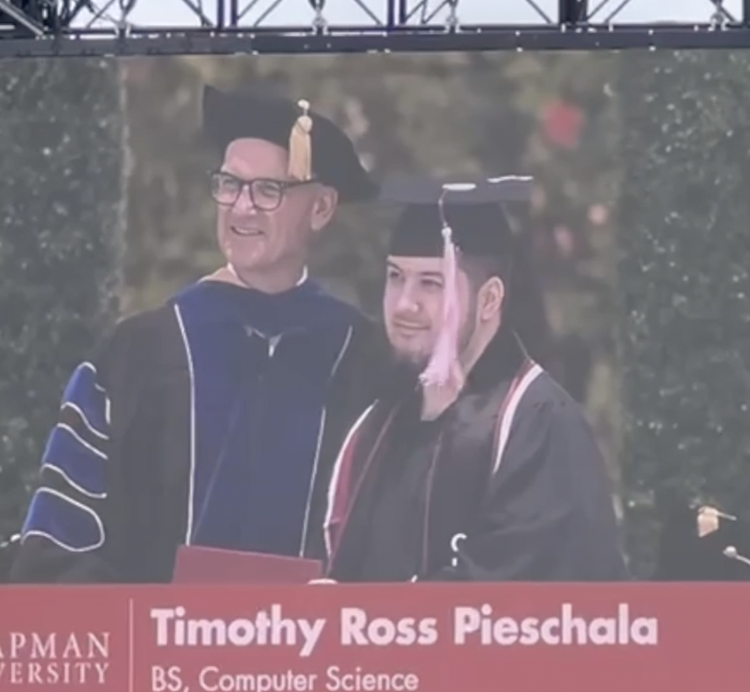
INTERVIEW 1: GRADUATING STUDENT
The user described a specific room in the library as sacred: a place where he plays Dungeons & Dragons and experiences a rich, multi-sensory layer of memory—from background sounds to objects and rituals like using special dice. He vividly recalled these details from memory alone, describing how ephemeral digital moments like “bits” or messages fade, while tactile cues endure.
INSIGHT: Memory is multisensory and ritual-based. People form emotional attachments to not just events but the objects, sounds, and routines that contextualize them—especially when revisited regularly in the same space.
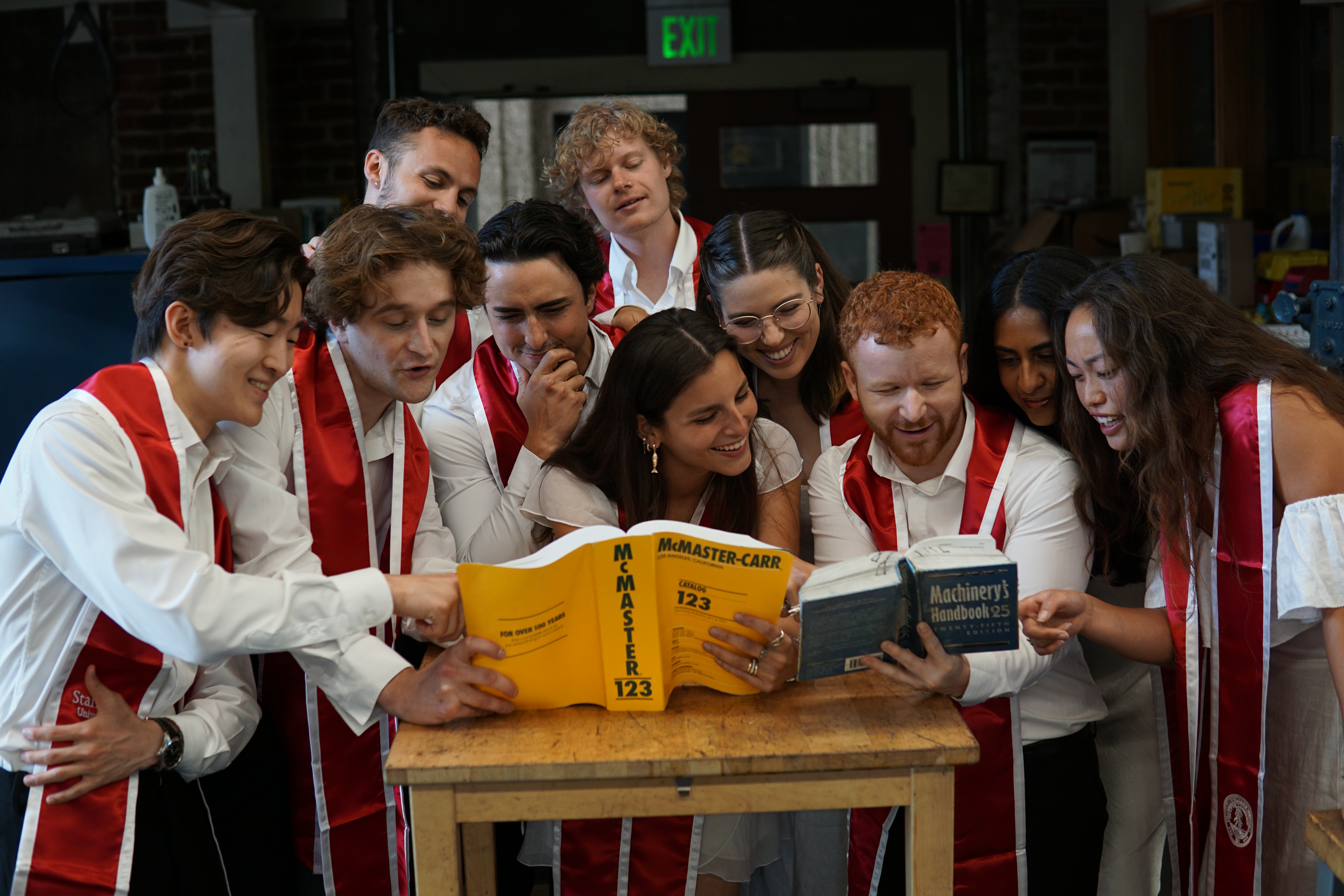
INTERVIEW 2: PRODUCT REALIZATION LAB STUDENTS
When asked about meaningful creations, makers and engineers at Stanford’s maker’s lab consistently tied stories to specific tools or corners of the lab. Their memories were less about the finished product and more about where and how it was made.
INSIGHT: The act of making imbues space with personal significance. Physical creation transforms otherwise neutral locations into memory anchors, suggesting that AR memory revisits could be more compelling when layered over personally meaningful environments.
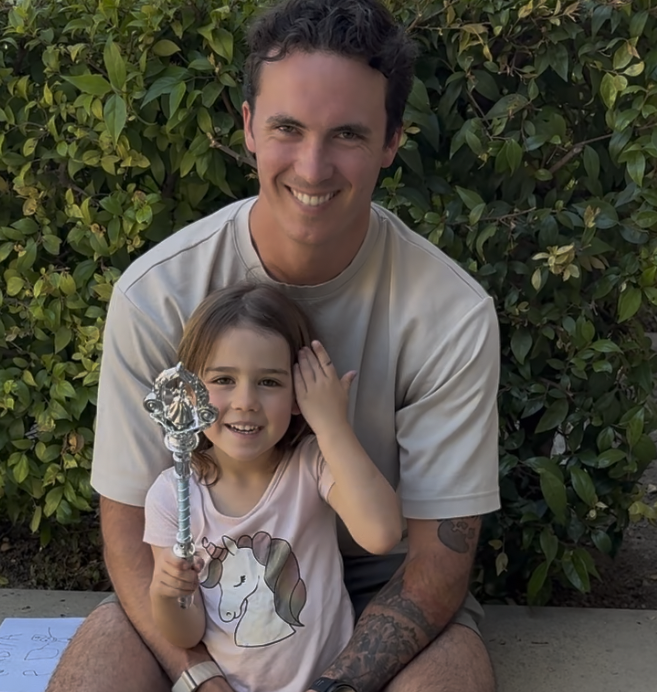
INTERVIEW 3: PARENT
He reflected on the scarcity of recorded memories from his own childhood and contrasted that with how intentionally he and his wife document their daughter's life. From regular photo and video collection to writing her bi-monthly emails, the act of memory collection became an act of devotion, one meant to be gifted years later.
INSIGHT: When the purpose of memory is gifting—not just archiving—people are willing to invest tremendous care and time. Memory, in this context, becomes a relational offering, suggesting that AR memories could be designed as time capsules or emotional inheritances for future selves or loved ones.
Across all these conversations, one insight stood out: memory is more than recollection—it’s relocation. This insight shaped our prototyping direction to focus on designing presence-rich, spatially anchored memory experiences. These would invite users to physically return to meaningful locations to see, hear, and feel the past layered into the present—sometimes to relive.
The Process: Prototyping
LOFI PROTOTYPE 1
Our first low-fidelity prototype explored what it might feel like to revisit a memory in virtual reality, specifically within the context of a long-distance relationship—or any relationship shaped by physical separation. We imagined a shared “third space” where two individuals wearing VR headsets could meet and then portal into a pre-recorded memory, such as a concert.
LOFI PROTOTYPE 2
Building on our earlier prototype, we began exploring what gifting a memory might look like in augmented reality. As a team, we found ourselves increasingly drawn to AR—specifically Snap’s Spectacles—because we wanted to blur the line between the virtual and the real, embedding memory into lived experience rather than replacing it. In this next phase, we focused on the relationship between the giver—the creator of a personal message or memory—and the receiver, the person who would later encounter and experience it
MEDFI PROTOTYPE
After rounds of conceptual exploration, we moved into technical development—specifically building our prototype in Snap’s Lens Studio. This transition was challenging, particularly when we began working with a feature called Custom Locations. Custom Locations is a powerful tool for Spectacles that enables creators to scan real-world environments and anchor AR content to specific physical geometries. Combined with Spectacles’ spatial persistence, Custom Locations promised a way to make our memories feel *truly situated* in the world. However, implementation proved far more difficult than expected. Debugging this feature consumed nearly three weeks, during which we tried every online resource, spoke with Snap representatives, and repeatedly tested new builds—without success. Despite the technical hurdles, this prototype still allowed us to communicate the *feeling* of our intended experience. In user testing, we gathered meaningful feedback on the need for user agency in our interactions, allowing a user to enter into the memory on their own time, rather than being forced into it.
The Result
After weeks of struggling with Custom Locations, we made a final pivot—this time using Image Marker, a feature in Lens Studio typically used to animate book covers or product labels. Image Marker allows developers to trigger AR content when a specific visual pattern is recognized through the phone or Spectacles. While not as spatially rich as a full 3D scan, it offered us a reliable alternative: we could still anchor memory experiences to physical locations, but through a visual marker instead of the surrounding geometry.
Our final video prototype showcased a complete user journey: entering a meaningful location and re-experiencing a memory captured there in time. The interaction begins with the user approaching a subtle image marker—once revealed, it triggers a still overlay image that anchored them in place. By pinching the play button, the user can then watch the recorded memory unfold, precisely where it was once made.
To make the experience as immersive as possible, we paid close attention to the design of every visual layer. Static images were refined in Adobe Illustrator, using soft, fading borders to ease the transition between AR content and the real world. For video overlays, we used Adobe Premiere Pro to create a dreamy, transparent effect: we drew freeform Gaussian blur masks around focal areas of each video and applied high feathering. A second opacity mask was layered on top, giving the outer edges a gentle fade—so the memory felt like it was bleeding into reality rather than interrupting it.
We also introduced totems—small, personal 3D objects tied to the emotional core of each memory. These were modeled using a combination of AI-generated concepts and hand-tuned CAD design. For the father-daughter story, it was a magic wand. For Katie’s graduation memory, a beloved music binder. For John’s, a coffee dripper he had built in a different class. Each totem appeared both physically and virtually, reinforcing the presence of the past in the present.
All of these elements came together for our final walkthrough at the project expo, where visitors could wander through the installation and encounter memories left behind. Though these messages weren’t meant for them, the emotional themes—parenthood, transition, creativity—were universal. Guests could empathize, reflect, and even imagine their own memories layered into the spaces around them.
One emotional moment stood out when a father of two daughters paused after experiencing the demo and said,
“I would pay anything to have something like this of my girls when they were little.”
That response validated the emotional power of what we were building. In the end, we believe we created more than just a prototype—we uncovered a starting point for a new kind of memory experience: one that lives in space, unfolds over time, and brings people back to what matters most.